The Modern Laundry: IoT and Washing Machine High-Efficiency Combinations
For investors of cash-intensive companies, the coin-op laundry industry is on the brink of a fundamental transformation. Basic machines and cash collection are becoming a model for business integrated with tech and service. Upgrading any old laundromat with modern-day software is no longer just a matter of new paint; it’s a strategic investment in operational intelligence and resource deployment. This investigation dissects the two significant upgrade blocks—IoT-enabled management and high-efficiency washer-dryer Combos and their relative implications for profitability.
Part 1: The Intel Layer of IoT Management Systems.
A laundry room becomes a networked and data-generating asset thanks to an IoT (Internet of Things) management system. It serves three different functions:
l Operational control and cost minimization: It can replace daily cash collection trips, and it enables real-time machine status checking. Owners’ immediate notifications for faults (such as coin jams, drainage problems) or maintenance issues (such as lint filter warnings) mean that repairs can be made proactively to avoid a loss of revenue or costly downtime. This greatly lowers the need for on-site labor and related costs.
l Revenue optimization & customer experience: Digital payment platforms (card, app, contactless) are now their expectation. They allow for easier top-ups of spend which facilitate the highest average spend and allow to dynamically price increases for larger capacities or premium cycles. For the owner, they are a seamless solution where they can keep track of exactly how much money he’s made from sales in cash, as well as preventing theft. Improved customer convenience – such as mobile alerts that you get at cycle end – directly affects retention.
l Data Based Decisions Making: The platform combines machine utilization data, peak hours data, and popular cycle types information. This data guides timely decisions: timing utility-heavy operations to off-peak hours, locating locations where use is reduced, and making evidence-informed decisions regarding future equipment procurement or marketing.
Part 2: The Core of Efficiency-Did the Washers work better than Dryer Combos?
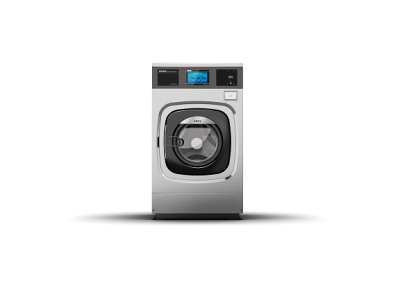
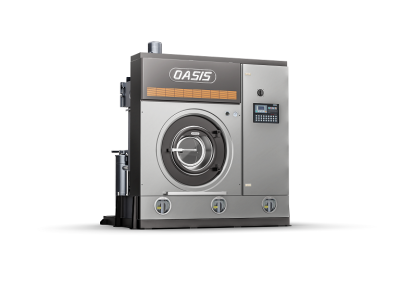
IOT can provide you with the “brain” of it, but the actual machine is what tells you how much the startup will be charged on a daily basis. For example, the washers and dryers that are highly efficient combine to offer huge value proposition to people who wish to save fuel, especially in spaces under pressure or regions with power stations limited to just 10 or 60 kilowatts per day.
The economic and technological advantages are tightly linked.
l The biggest cost save is due to heat recovery technology; most of the hot air in the drying condition is recycled to heat water used in the wash, greatly reducing the thermal power consumption. This results in a lower price per wash than an older or independent machine running.
l Space Monetization & Throughput: Single combo unit releases the floor equivalent to one machine footprint. The place can be monetized by adding additional units that generate income or to make customers feel more comfortable with places to sit or for the vending machine. For the customer this "finish-and-leave" convenience of a machine does the finish-and-leave task (take out the end of it all) enhances the turnover rate particularly when a busier process can be performed.
l Simple Maintenance & Appeal: Keeping one unit separate for maintenance can be simpler than two-on-one maintenance. On the one hand, to the customer, the promise of an all-in-one, modern solution can never be overestimated; it positions a laundromat as modern, reliable and user-friendly.
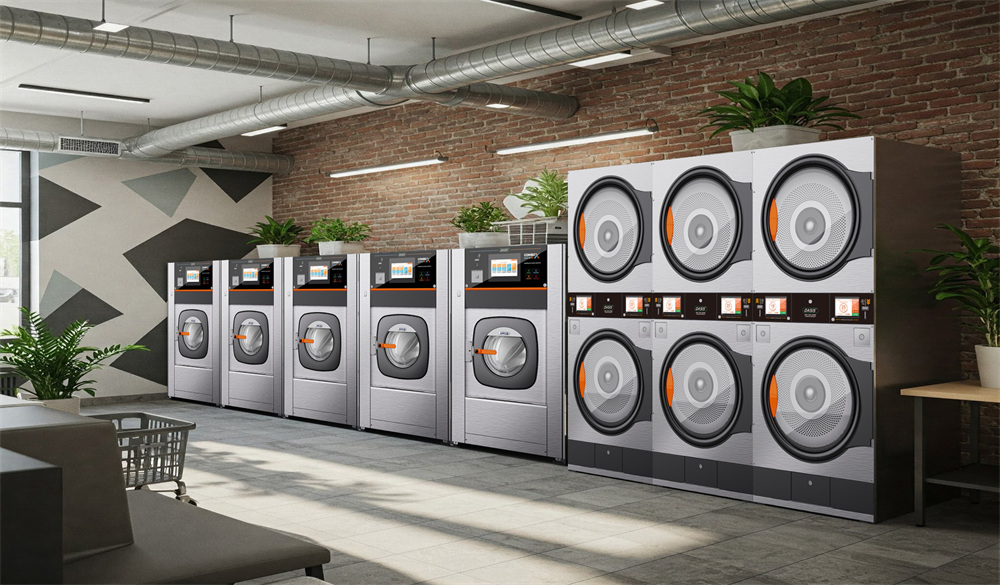
Integrated ROI Analysis: An Empirical Comparison.
The full transformative benefit can only be experienced when smart IoT is coupled with streamlined hardware.
Business Metric | Traditional Laundromat Model | Modernized with IoT & Efficient Combos |
Operational Overhead | High (Daily cash collection, reactive repairs, manual tracking). | Low (Remote monitoring, cashless payments, proactive maintenance alerts). |
Utility Cost per Finished Load | Higher (Separate, often less efficient washers and dryers). | Reduced (Combined cycle efficiency, advanced heat and water recovery systems). |
Customer Value & Retention | Basic, transactional. | Enhanced (App notifications, flexible payment, premium convenient service). |
Data for Decision-Making | Limited or anecdotal. | Comprehensive (Real-time usage stats, revenue reports, machine health analytics). |
Space Utilization | Fixed layout for separate machines. | Optimized (Freed space for additional units or improved amenities). |
Conclusion: Designing a Future-Ready Asset.
Upgrading a laundromat with IOT systems and High-efficiency Washer-Dryer Combos is an investment in resilience and increased net profitability. But it methodically meets the business’s biggest pain points: high operational labor (as people often are), volatile utility costs and stagnant customer experience. The ROI is more than just instant utility savings. This makes for a more sensible, data-driven, and attractive business which is more prepared to compete in a service-centered market. For the investor this means a more frictionless asset with less noise, more predictable costs, and a stronger value proposition for the long run.